
How to Get Nail Polish Out of Carpet: Fresh & Dried Stains

Emergency Action: If you just spilled, STOP. Do not rub the stain. Grab a dry paper towel and press straight down (vertically) to soak up excess liquid. Rubbing will push the polish deeper into the carpet backing, making it permanent.
Spilled nail polish on your carpet feels like a disaster, but it doesn’t have to be. Whether you’re dealing with a fresh puddle of “Power Red” or a week-old dried crust, The secret to removal isn’t just the cleaner you use – it’s matching the method to your carpet fiber type.
In this expert-backed guide, we cover:
- The 30-Second Rule: What to do the moment the bottle tips.
- Fiber Safety: Why Nylon, Polyester, and Wool require different solvents.
- The “Pro” Secrets: Using Glycerine and Rubbing Alcohol to dissolve lacquer without melting your carpet.
The key is choosing a safe cleaning method that breaks down the polish without discoloring or soaking the carpet.
Quick-Reference: Can Your Carpet Handle DIY?
Before you grab the remove, identify your fiber to avoid permanent “melt” marks or bleaching.
|
Carpet Material |
Common Types |
Recommended Solvent |
Risk Level |
|
Synthetic |
Nylon, Polyester, Triexta |
70% Rubbing Alcohol / Non-Acetone |
Low |
|
Natural |
Wool, Sisal, Cotton |
Diluted White Vinegar / Mild Detergent |
Medium |
|
Delicate |
Silk, Persian, Antique |
Professional Cleaning Only |
High |
DIY DIfficulty Summary
|
Difficult |
2 / 10 |
|
Time Required |
10 – 20 minutes |
|
Skill Level |
Beginner |
|
Risk Level |
Depends on Carpet Type |
Tools Needed
Before you start, gather these supplies. Most are already in your kitchen or bathroom. Using the wrong too (like a sharp knife) can slice the carpet fibers, so stick to this list.
The Solvents
- 70% Isopropyl (Rubbing Alcohol): The gold standard. It dissolves the lacquer without melting synthetic fibers.
- White Vinegar: A natural acid that breaks down red and dark dyes without bleaching.
- Non-Acetone Nail Polish Remover: Use only if rubbing alcohol is not available. Check the label – if it contains Acetone, keep it away from your carpet.
- Distilled Water: Better than tap water for the final rinse to prevent mineral buildup in the fibers.
Mechanical Tools
- Dull Spoon or Butter Knife: Essential for gently “flicking” away dried polish flakes without fraying the pile.
- White Microfiber Cloths: Must be white. Colored rags can “bleed” their own dye into the carpet when soaked in alcohol.
- Soft-Bristled Toothbrush: used for agitating Berger or deep-pile carpets (like Shag) to reach polish trapped between loops.
Finishing Touches
- Clear Dish Soap (Dawn is best): To remove the oily residue left behind the polish or removers.
- Heavy-Duty Paper Towels: For the initial high-pressure blotting.
Most modern carpets are made of Synthetic Polymers (plastic). Acetone is a powerful solvent designed to dissolve plastic. If you pour pure acetone on a polyester or nylon carpet, it can cause delamination (where the carpet fibers detach from the backing) or literally melt the tips of the fibers together into a hard, crusty “burn” mark that cannot be fixed.
Method 1: Rapid Response for Fresh Spills (the 30-second rule)

If the polish is still wet, your priority is extraction, not cleaning. If you spread the liquid, you triple the work.
- The High-Pressure Blot: Take a stack of white paper towels. Press straight down with the heel of your hand. Hold for 5 seconds to let the towel “wick” the liquid polish out of the pile. Do not wipe.
- The Moisture Barrier: Lightly mist the clean carpet around the stain with a tiny bit of water. This prevents the polish from traveling to dry fibers while you work.
- Outside-In Dissolve: Dampen a white cloth with 70% Rubbing Alcohol. Blot starting from the outer edges of the spill and move toward the center.
- Soap Rinse: Mix 1 tsp clear dish soap with 1 cup warm water. Blot the area to remove any remaining pigment and alcohol residue.
Method 2: Restoring Dried Nail Polish (The 3-Step Sequence)

Dried polish is essentially a layer of hard plastic bonded to your carpet. To remove it without pulling out the carpet fibers, you must rehydrate it first.
- Rehydrate with Glycerin: Apply a small drop of Vegetable Glycerin or non-oily hair conditioner to the dried crust. Let it sit for 15 minutes. This softens the lacquer.
- The Gentle Scrape: Use your dull spoon to flick the edges of the softened polish. Vacuum up the dry flakes immediately so they don’t get crushed back into the fibers.
- Pigment Extraction: Once the bulk is gone, dampen a cloth with rubbing alcohol. Press and hold for 30 seconds to dissolve the pigment trapped inside the fiber. Repeat until the cloth comes away clean.
Method 3: Specialized solution for difficult colors
- Red & Pink Stains: If rubbing alcohol leaves a pink shadow, switch to White Vinegar. The acidity breaks down red dyes more effectively than alcohol.
- Dark & Black Stains: Apply White Foam Shaving Cream. The surfactants lift heavy carbon pigments to the surface for easier blotting.
- Glitter Polish: After the polish is removed, use Packing Tape to gently lift any remaining glitter specs from the carpet pile.
The “Carpet Killer” Warnings (Read before starting)
Before you grab a bottom from under the sink, understand that certain household cleaners will cause permanent chemical damage that even a professional may not be able to fix.

- The Acetone Trap (Synthetic Fiber Melting): If your carpet is Nylon, Polyester, or Triexta, avoid pure Acetone. These carpets are essentially plastic polymers. Acetone is a solvent designed to melt plastic.
- The Risk: It can cause delamination (separating the fibers from the backing) or melt the tips of the fibers into a hard crusty “burn” mark.
- The Bleach & Ammonia Danger: Never use bleach or ammonia-based cleaners on colored carpet.
- The Risk: Bleach creates a permanent yellow or white “halo” by stripping the dye. Ammonia can react with the chemicals int he carpet’s secondary backing, creating a lingering “pet urine” odor that is impossible to remove.
- The “Hairspray” Myth: Old DIY guides suggest hairspray, but modern formulas have changed.
- The Risk: Most hairsprays now contain high levels of lacquer and oils. This leaves a sticky residue that acts like a magnet for dirt. You may get the polish out, but you’ll be left with a permanent black “shadow” on your carpet within a month.
- Heat (The Permanent Binder): Never use a hairdryer, or steam cleaner to “dry” the area.
- The Risk: Heat thermally sets the lacquer and dyes into the fiber. Once heat is applied, the stain becomes a permanent part of the carpet’s molecular structure.
Methods You Shoul Not Use
Avoid these—they cause permanent damage:
- Pure acetone – Can bleach carpet fibers and dissolve the backing
- Bleach or ammonia – Causes discoloration and can permanently lighten the carpet.
- Hairspray – Leaves sticky residue that attracts dirt and makes the stain worse.
- Strong chemical cleaners – May break down carpet fibers and damage dyes.
- Steam cleaners (heat sets stains) – Heat bonds the nail polish deeper into the fibers, making removal harder
- Scrub brushes or abrasive tools – Fray the carpet pile and spread the stain outward.
- Excessive water soaking – Pushes the stain deeper into the padding and increases the risk of mold or odors.
When to Call a Professional
DIY methods work for surface-level spills, but some nail polish accidents reach the “structural” layers of your flooring. If you see these four red flags, stop cleaning and call an IICRC-certified professional
The “Shadow” reappears (wicking)
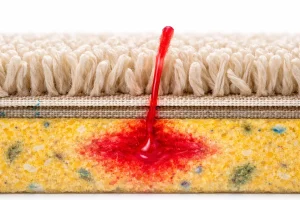
If the stain disappears but then “grows” back a day later, you are experiencing wicking.
- The Cause: The polish has soaked into the carpet backing or the padding underneath. As the carpet dries, the liquid polish is pulled back up the fibers to the surface.
- The Pro Fix: Professionals use sub-surface extraction tools (like a “Water Claw”) to pull the lacquer out of the pad without removing the carpet.
Large Volume Spills (over 2 ounces)
If a full bottle of nail polish shattered, the liquid has likely reached the subfloor.
- The Risk: Standard blotting will only spread a large spill. A professional needs to use a high-solvent rinse and industrial-strength vacuum to prevent the polish from permanently bonding the carpet to the subfloor.
Natural Fiber Sensitivity (Wool, silk, sisal)
Natural fibers are highly absorbent and protein-based.
- The Risk: Rubbing alcohol and vinegar can permanently alter the pH balance of wool, causing “fiber browning” or bleeding of the carpet’s original dyes.
“Bleach” or melt marks
If you accidentally used acetone or a harsh chemical and the carpet feels melted, stiff or white, stop immediately.
- The Pro Fix: A professional can perform a “bonded insert” (surgical carpet patching). They cut out the damaged “plug” and replace it with a fresh piece of carpet from a remnant or a closet corner..
Troubleshooting Table
|
Symptom |
Likely Cause |
Quick Fix |
|
Stain still visible |
Dried polish deep in fibers |
Repeat alcohol or vinegar method |
|
Stain spreads while cleaning |
Too much liquid used |
Blot and use less solution |
|
Strong smell remains |
Too much solvent |
Rinse with vinegar + water |
|
Carpet feels stiff |
Soap residue |
Rinse with clean water |
|
Color fading |
Harsh chemical used previously |
Switch to mild methods only |