
BAking Soda and Vinegar Drain Cleaner: Does It Actually Work?
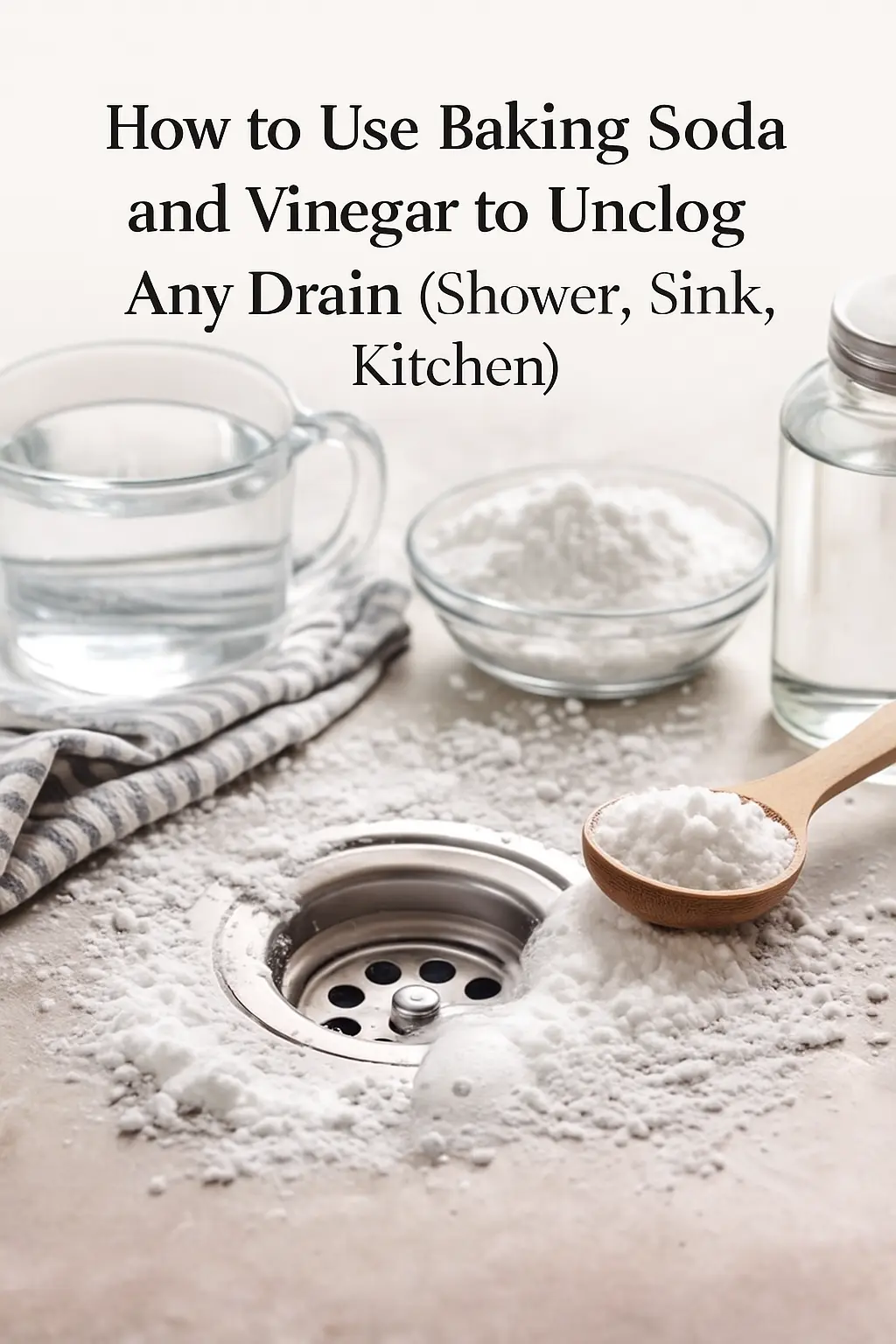
A baking soda and vinegar drain cleaner is one of the easiest, safest, and most affordable ways to clear a slow drain. Whether your problem is a shower drain, bathroom sink, or kitchen drain, this simple homemade method can remove odors, loosen buildup, and improve drainage without harsh chemicals.
In this guide, you’ll learn exactly how baking soda and vinegar work, when this method is effective, when it won’t help, and how to unclog a drain naturally using items already in your home.
diy difficulty summary
|
Difficult |
3 / 10 |
|
Time Required |
10 – 25 minutes |
|
Skill Level |
Beginner |
|
Risk Level |
Low |
tools you’ll need
You’ll only need basic household items:
- ½ cup baking soda
- 1 cup white vinegar
- Boiling water or very hot tap water
- Measuring cup
- A drain plug or small bowl
- Gloves (optional)
This simple homemade drain cleaner works for most slow drains and mild blockages.
common causes of drain problems
Clogged or slow drains are often caused by:
- Soap scum buildup along pipe walls
- Hair collecting inside shower and tub drains
- Grease and fats solidifying in kitchen pipes
- Food particles trapped behind garbage disposal blades
- Black slime from bacteria growth
- Mineral deposits (especially in older homes)
- Odors caused by organic buildup
A baking soda and vinegar down the drain treatment works well for these soft clogs and smells.
symptoms of a drain that needs cleaning
If you notice any of the following, it’s time to use baking soda and vinegar to clean the drain:
- Water draining slower than usual
- Gurgling or bubbling noises
- Foul odors coming up the drain
- Standing water in the shower
- Sink draining slowly
- Water backing up into other drains
- Black slime on the drain opening
These signs indicate buildup that a baking soda sink drain method can often fix.\
safety warnings (read before you start)
Before starting vinegar and baking soda drain cleaning, keep these safety rules in mind:
- NEVER mix baking soda and vinegar with chemical drain cleaners (dangerous reaction).
- Do not use the method if you recently poured bleach or ammonia down the drain.
- Avoid boiling water on old PVC pipes—use hot tap water instead.
- If the drain has standing water, remove as much as possible first.
- The method is safe for PVC and metal pipes, but don’t combine it with industrial cleaners.
Baking soda and vinegar are considered safe and one of the gentlest cleaning methods available
step-by-step guide: how to unclog a drain naturally
This method works for any household drain:
✔ Bathroom sink
✔ Kitchen sink
✔ Shower drain
✔ Tub drain
✔ Laundry drain
step 1 – pour baking soda into the drain
- Add ½ cup of baking soda directly into the drain.
- It helps loosen grime, deodorizes, and coats the pipe interior.
step 2 – add white vinegar
- Pour 1 cup of white vinegar slowly
- You’ll hear fizzing – this is the chemical reaction that helps break down buildup.
step 3 – cover the drain & let it sit
- Plug the drain with a rubber stopper or bowl for 10-15 minutes
- This forces the reaction downward instead of bubbling up
step 4 – flush with boiling or hot water
- Pour boiling water (safe on metal) or very hot tap water (safe on PVC) to clear loosened debris
- This clears most mild clogs when using a baking soda and vinegar drain cleaner
step 5 – repeat if necessary
- For touch odors or slime, repeat the process once.
- If no improvement occurs, you’ve likely got a deeper clot
when baking soda & vinegar won’t work
This method does NOT work for:
- Hair clumps stuck deep in the pipe
- Hardened grease plugs
- Solid objects (e.g., bottle caps, toys, food chunks)
- Plumbing venting issues
- Tree roots
- Collapsed or broken pipes
- Clogs more than 3–4 feet deep
In these cases, baking soda and vinegar down the drain won’t reach the blockage.
when to call a professional
Call a plumber if:
- Water backs up into other fixtures
- The clog returns frequently
- You smell sewage
- Drains gurgle loudly
- Standing water does not drain despite multiple attempts
- The toilet backs up while using the sink
A professional can use a drain snake, auger, or hydro-jet to clear deep clogs.
troubleshooting table
|
Problem |
Likely Cause |
Solution |
|
Drain still slow |
Hair deeper in the pipe |
Use a drain snake |
|
Odor returns |
Food stuck in disposal |
Clean disposal + repeat treatment |
|
No fizz reaction |
Baking soda stuck or wet pipe |
Dry the drain first |
|
Water backing up |
Major blockage |
Professional cleaning |
|
Slow draining sink |
Soap scum buildup |
Repeat baking soda vinegar drain treatment |


One Comment